
Home » Information Technology
Information Technology
The B.Tech in Information Technology is a four-year undergraduate programme designed to equip students with both foundational and advanced knowledge in computing and information systems. Established in 2019 with an intake of 60 students, the department focuses on delivering high-quality education and fostering the holistic development of every student.
Our Vision & Mission
At Vignan University, our vision is to be a global leader in education and research, nurturing future-ready professionals.
To impart technical education producing competent and socially responsible engineering professionals in the field of Information Technology
M1:To make the teaching–learning process more engaging, effective, and stimulating.
M2: To impart strong foundational knowledge in sciences and information technology while fostering a positive attitude.
M3: To create a conducive environment for developing skills and technologies aligned with industry needs.
Our Journey of Excellence
The Department of Information Technology at VMTW was established with a vision to empower students with advanced computing knowledge and practical skills to meet the challenges of the digital world. The department focuses on nurturing problem-solvers and technology leaders who contribute to innovation and development across industries.
2019
Department of Information Technology established with an initial intake of 60 students.
Facilities
State-of-the-art laboratories, 100+ systems with licensed software, modern classrooms, and computing resources designed to enhance practical learning and technical expertise.
Curriculum
Information Technology fundamentals, Software Development, Networking, Cybersecurity, Cloud Computing, Internet of Things (IoT), Data Management, and other emerging technologies.
Leadership
Guided by experienced faculty, the department emphasizes academic excellence, industry collaboration, and personality development to prepare students for future career opportunities.
Department Leadership
Meet our Head of Department
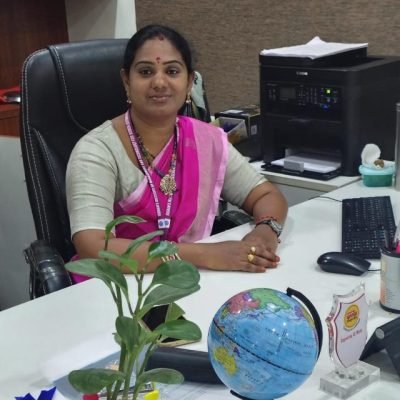
Dr. D. Shanthi
Associate Professor & Head, Department of Information Technology
Dr. D. Shanthi is the Professor & Head of the Department of Information Technology at Vignan’s Institute of Management and Technology for Women (VMTW), Hyderabad. She holds a Postdoctoral degree (USA), a Ph.D. in Computer Science, M.Tech (CSE), B.Tech (CSE), a PG Diploma in AI from NIT Warangal, and an M.Sc. in Psychology. With over 18 years of academic and research experience, her expertise includes Artificial Intelligence, Machine Learning, Generative AI, Agentic AI, Software Engineering, and Biometrics. She has published 45+ research papers, filed 16 patents, holds 3 copyrights, and authored several national and international books. A recognized Ph.D. guide at JNTUH, she serves on the editorial boards of reputed international journals and has delivered expert talks at leading academic and professional institutions.
Message from HOD
Welcome to the Department of Information Technology. Our mission is to provide a robust academic environment that integrates practical learning, research innovation, and technical expertise. We strive to prepare students to excel in emerging technologies such as AI, Data Science, Blockchain, and Cloud Computing while fostering a sense of responsibility, ethical awareness, and a lifelong learning mindset.
Our Experienced Instructors
Our team of seasoned instructors brings years of expertise, passion for teaching, and real-world experience.
Educational Framework
Our comprehensive educational approach designed to create industry-ready professionals
PEO1
Students will establish a strong foundation in computer science by applying mathematical principles and core engineering fundamentals to analyze, design, and develop effective computing solutions.
PEO2
Students will use modern tools, platforms, and technologies supported by a strong learning infrastructure to solve computing problems and adapt to technological changes.
PEO3
Students will prepare for careers and entrepreneurship by developing employability skills, professional competence, ethical values, and social responsibility to meet industry and societal needs.
Program Outcomes (PO)
Comprehensive learning outcomes that our graduates will demonstrate
PO1
Engineering Knowledge: Apply the knowledge of mathematics, science, engineering fundamentals and an engineering specialization to the solution of complex engineering problems
PO2
Problem Analysis: Identify, formulate, review research literature, and analyze complex engineering problems reaching substantiated conclusions using first principles of mathematics, natural sciences and Engineering sciences.
PO3
Design/Development of Solutions: Design solutions for complex engineering problems and design system components or processes that meet the specified needs with appropriate consideration for the public health safety, and the cultural, societal, and environmental considerations.
PO4
Conduct Investigations of Complex Problems: Use research-based knowledge and research methods including design of experiments, analysis and interpretation of data, and synthesis of the information to provide valid conclusions
PO5
Modern Tool Usage: Create, select and apply appropriate techniques, resources and modern engineering and IT tools including prediction and modeling to complex engineering activities with an understanding of the limitations.
PO6
The Engineer and Society: Apply reasoning informed by the contextual knowledge to assess societal, health, safety, legal and cultural issues and the consequent responsibilities relevant to the professional engineering practice.
PO7
Environment and Sustainability: Understand the impact of the professional engineering solutions in societal and environmental contexts and demonstrate the knowledge of,and need for sustainable development.
PO8
Ethics: : Apply ethical principles and commit to professional ethics and responsibilities and norms of the engineering practice.
PO9
Communication: Communicate effectively on complex engineering activities with the engineering community and with society at large, such as being able to comprehend and write effective reports and design documentation, make effective presentations and give and receive clear instructions.
PO10
Project Management and Finance: Demonstrate knowledge and understanding of the engineering management principles and apply these to one's own work, as a member and leader in a team to manage projects and in multidisciplinary environments.
PO11
Life-Long Learning: Recognize the need for and have the preparation and ability to engage in independent and lifelong learning in the broadest context of technological change.
Engineering Knowledge
Apply the knowledge of mathematics, science, engineering fundamentals and an engineering specialization to the solution of complex engineering problems.
Additional Outcomes
Our program encompasses all 12 standard ABET program outcomes including problem analysis, design/development of solutions, modern tool usage, individual and team work, communication, project management, lifelong learning, and more.
PSO1
Apply mathematical foundations, basic sciences, and core engineering principles in a multidisciplinary manner to analyse and solve complex computer science and engineering problems.
PSO2
Develop solutions to real-world computing problems using modern tools, diverse programming languages, and open-source platforms.
PSO3
Apply ethical principles and consider societal impact and Sustainable Development Goals while developing and using computing solutions.
R18 Regulation
Academic Calendar
Syllabus
Faculty
| S.No | Name | Designation | Qualification |
|---|---|---|---|
| 01 | Dr. D. Shanthi | Professor & HOD | M.Tech., Ph.D |
| 02 | Mr. R. Krishna Nayak | Associate Professor | M.Tech |
| 03 | Mrs. K. Helini | Associate Professor | M.Tech |
| 04 | Mrs. K. Sandhya Rani | Associate Professor | M.Tech |
| 05 | Mr. S. Chandra Sheker | Assistant Professor | M.Tech |
| 06 | Mrs. A. Eenaja | Assistant Professor | M.Tech |
| 07 | Mrs. A. Rajini Devi | Assistant Professor | M.Tech |
| 08 | Ms. D. Kousari Kumari | Assistant Professor | M.Tech |
| 09 | Mr. U. Venkat Rao | Assistant Professor | M.Tech |
| 10 | Mrs. B. Archana | Assistant Professor | M.Tech |
| 11 | Mr. K. Giridhar | Assistant Professor | M.Tech |
| 12 | Mr. M. Srinivasa Rao | Assistant Professor | M.Tech |
| 13 | Mrs. Ch. Mounika | Assistant Professor | M.Tech |
Faculty Publications
| S.No | Applicant | Title | App. No. | Filed | Published | Status |
|---|---|---|---|---|---|---|
| 1 | Dr. D. Shanthi | Next generation computer integrated surgical robot arm for laparoscopy | 436515-001 | 5/11/2024 | 27/12/2024 | Granted |
| 2 | Dr. P. Eswaraiah | Semantic Ontology Models for Optimal Extraction of Medical Data Content | 202441050324 | 20/06/2024 | 05/07/2024 | Published |
| 3 | Dr. Janakiraman Ranjith | Innovative Approaches to Preventing Catastrophic Forgetting in Transformer-Based Text Classification | 202441054782 A | 18/07/2024 | 09/08/2024 | Published |
| 4 | Mr. U. Venkat Rao | Systems And Methods for Predicting Patient Outcome to Cancer Therapy | 202441045279 | 12/06/2024 | 21/06/2024 | Published |
| 5 | Mrs. Kolan Helini | Multi-task learning in graph networking for simultaneous community detection & influence identification | 20254107899A | 28/02/2025 | 14/03/2025 | Published |
| 6 | Mrs. Eenaja Aileni | Multi-task learning in graph networking for simultaneous community detection & influence identification | 20254107899A | 28/02/2025 | 14/03/2025 | Published |
| S.No | Applicant | Title | App. No. | Filed | Published | Status |
|---|---|---|---|---|---|---|
| 1 | Mr. Janakiraman Ranjith | Integrating DNA Computation with Fragment Assembly | 202441050633 A | 02-07-2024 | 05-07-2024 | Published |
| 2 | Fouziya Mojammed | Deciphering Ns3 Network Simulations with Advancing Privacy and Security in IoT Aggregation Techniques | 02441015632 A | 02-03-2024 | 22-03-2024 | Published |
| 3 | Mrs. Swapna Chiluguri | Deciphering Ns3 Network Simulations with Advancing Privacy and Security in IoT Aggregation Techniques | 02441015632 A | 02-03-2024 | 22-03-2024 | Published |
| 4 | Mrs. Eenaja Aileni | The Edge-Cloud Synergy for Improved Data Processing in the Power Grid Transmitting Control | 202341070767 A | 17/10/2023 | 01/12/2023 | Published |
| S.No | Applicant | Title | App. No. | Filed | Published | Status |
|---|---|---|---|---|---|---|
| 1 | Mr. Janakiraman Ranjith | Smart Barrier for Reserved Parking | 379250-001 | 4-02-2023 | 2-04-2024 | Granted |
| 2 | Fouziya Mojammed | Automated screening and diagnosis of common vision-threatening diseases | 202241025685 | 03-05-2022 | 13-05-2022 | Published |
| 3 | Fouziya Mojammed | Agriculture Drone for Monitoring and Spraying Pesticides | 375099-001 | 05-12-2022 | 25-01-2023 | — |
| 4 | Mrs. Kolan Helini | Brain tumour diagnosis with advance Image technology and Machine learning | 202441045279 | 03/05/2022 | 13/05/2022 | Published |
| 5 | Mrs. Kolan Helini | Ordinary Application | 202241025669 | 03/05/2022 | 13/05/2022 | Published |
| 6 | Mr. U. Venkat Rao | Solar and Wind Operated Hybrid Power Station | 375291-001 | 08/12/2022 | 25/01/2023 | Published |
| S.No | Author(s) | Title | Year | Index | Link |
|---|---|---|---|---|---|
| 1 | Dr. D. Shanthi | Web-based video analysis and visualization of magnetic resonance imaging reports for enhanced patient understanding | 2025 | UGC | View ↗ |
| 2 | Dr. D. Shanthi | Flavors of India: A web platform for regional food cuisines | 2025 | UGC | — |
| 3 | Dr. D. Shanthi | Developing solutions for assessing mental health and well-being in youth | 2024 | UGC | View ↗ |
| 4 | Dr. D. Shanthi | AI-driven adaptive IT training: A personalized learning framework for enhanced knowledge retention | 2025 | UGC | — |
| 5 | Dr. D. Shanthi | Exploring the essence of Krishna temples | 2025 | UGC | View ↗ |
| 6 | Dr. D. Shanthi | IoT–ML based smart attendance system with report generation | 2025 | UGC | — |
| 7 | Dr. D. Shanthi | Reflect AI: A smart mirror | 2025 | UGC | View ↗ |
| 8 | Mrs. Eenaja Aileni | Innovative blood group detection through image processing and fingerprint recognition | 2025 | UGC | View ↗ |
| 9 | Mrs. Eenaja Aileni | A cloud security assessment model for mitigating advanced persistent threats in cloud computing systems | 2025 | UGC | View ↗ |
| 10 | Dr. P. Eswaraiah | An analytical review of large language models leveraging KDGI fine-tuning, quantum embeddings, and multimodal architectures | 2025 | UGC | View ↗ |
| 11 | Dr. P. Eswaraiah | Deep learning-based information retrieval with normalized dominant feature subset and weighted vector model | 2024 | UGC | View ↗ |
| 12 | Dr. Janakiraman Ranjith | Mitigating catastrophic forgetting in deep learning models for sentiment analysis | 2024 | IEEE | View ↗ |
| 13 | Mrs. Swapna Chiluguri | Deep multimodal fusion for ingredient prediction from food images and recipe descriptions | 2025 | Scopus | View ↗ |
| 14 | Mrs. Swapna Chiluguri | Modular network architectures for enhanced interpretability and efficient knowledge transfer in ML | 2025 | Scopus | View ↗ |
| 15 | Mrs. Swapna Chiluguri | The requirement analysis of the IoT-based vehicular spatial allocation system | 2025 | UGC | View ↗ |
| 16 | Mrs. Swapna Chiluguri | Machine learning based detection for compromised accounts on social media networks | 2025 | UGC | View ↗ |
| 17 | Mrs. Kolan Helini | Real time crowd counting system using machine learning | 2025 | IEEE | View ↗ |
| 18 | Mrs. Kolan Helini | AI-driven big data analytics for human behavior modeling and forecasting | 2025 | IJPREMS | View ↗ |
| 19 | Mrs. Kolan Helini | TOA: Optimizing VM failure rate and energy consumption in task scheduling through cloud-fog environment | 2025 | IEEE | View ↗ |
| 20 | Mrs. P. Amreswari | A data-driven engine starter system using ESP32 with multi-layer authentication and alerts | 2025 | UGC | — |
| 21 | Mrs. P. Amreswari | Data science for AI chatbot bias detection and mitigation in healthcare | 2025 | UGC | — |
| 22 | Mrs. Fouziya Mohammad | Enhancing IoT networks with AI-optimized blockchain and edge computing for improved scalability | 2024 | Scopus | View ↗ |
| 23 | Mrs. Fouziya Mohammad | Sentiment classification and deceptive review detection in hotel feedback using deep learning | 2025 | UGC | View ↗ |
| 24 | Mrs. Fouziya Mohammad | Herbal plant identification using deep learning | 2025 | UGC | View ↗ |
| 25 | Mr. Chandra Shekher | Price & feature comparison | 2025 | UGC | — |
| 26 | Mr. Chandra Shekher | An integrated approach for image cataloguing and recognition of animals using ML | 2025 | UGC | — |
| 27 | Mrs. Sandhya Rani Gangu | Fusion-driven deep learning framework for image forgery detection | 2025 | UGC | — |
| 28 | Mrs. Sandhya Rani Gangu | Automatic detection of damaged roads and lane detection using deep learning | 2025 | UGC | — |
| 29 | Mrs. Sandhya Rani Gangu | Rice grain quality analysis using image processing | 2025 | UGC | — |
| S.No | Author(s) | Title | Year | Index | Link |
|---|---|---|---|---|---|
| 1 | Dr. Janakiraman Ranjith | Modular network architectures for enhanced interpretability and efficient knowledge transfer in ML | 2024 | UGC | View ↗ |
| 2 | Dr. Janakiraman Ranjith | Enhancing IoT networks with AI optimized blockchain and edge computing | 2024 | UGC | View ↗ |
| 3 | Dr. Janakiraman Ranjith | Advancements and challenges in transfer learning and domain adaptation | 2024 | UGC | View ↗ |
| 4 | Mrs. Swapna Chiluguri | Innovative appliance of identification of facial features with image processing and deep learning CNNs | 2024 | UGC | View ↗ |
| 5 | Mrs. Swapna Chiluguri | Classification and identification of liver cancer using well-organized image processing techniques | 2024 | UGC | — |
| 6 | Mrs. Swapna Chiluguri | A narrative mechanism of artificial image classification and discovery using ML algorithms | 2024 | UGC | View ↗ |
| 7 | Mrs. Kolan Helini | Forecasting and examination of crop life using AI and machine learning surface energy balance algorithm | 2024 | UGC | — |
| 8 | Mrs. Kolan Helini | MANET's node secure mobility predictions using enhanced adaptive learning techniques | 2023 | IEEE | — |
| 9 | Mrs. P. Amreswari | Discovery and accurate diagnosis of tumors in liver using generative AI models | 2024 | UGC | — |
| 10 | Mrs. Eenaja Aileni | Human computer interaction — gesture recognition using deep learning LSTM neural networks | 2024 | UGC | — |
| 11 | Mr. U. Venkat Rao | Engineering humorless armrest modelling by using robot functioning organizations | 2024 | UGC | — |
| 12 | Mr. U. Venkat Rao | Feature extraction of agriculture crop recommendation using advanced ML generative algorithms | 2024 | UGC | View ↗ |
| 13 | Mr. Chandra Shekher | Road transport solutions: License plate number extraction and helmet detection using YOLO v3 and CNN | 2024 | UGC | — |
| 14 | Mr. Chandra Shekher | Investigation and recognition of android malware by using ML classification algorithms | 2024 | UGC | — |
| S.No | Author(s) | Title | Year | Index |
|---|---|---|---|---|
| 1 | Mrs. K. Helini | An integrated methodology of TsF-KNN-based automated data classification and security for mobile cloud computing | 2023 | Springer |
| 2 | Mrs. K. Helini | Aggregation technique to integrate texture and motion features for traffic data | 2022 | UGC |
| 3 | Mr. U. Venkat Rao | Detection and eradication of weeds in farming lands using comprehensive ML techniques | 2023 | UGC |
| 4 | Mr. U. Venkat Rao | A study on CSF-cloud computing impact organization performance and identify critical success factors | 2022 | UGC |
| 5 | Dr. A. Sudheer Babu | Early disease detection of black gram plant leaf using cloud computing based YOLO v8 model | 2023 | UGC |
| 6 | Dr. Ch. Baswaraj | Secured data sharing for accountable cloud | 2023 | UGC |
| 7 | Mrs. C. Swapna | A narrative mechanism of artificial image classification and discovery using ML algorithms | 2023 | Scopus |
| 8 | Mrs. A. Eenaja | Semi supervised machine learning for DDoS detection | 2022 | — |
| S.No | Author | Title | Conference | Type | Publisher | Link |
|---|---|---|---|---|---|---|
| 1 | Mr. J. Ranjith | Mitigating Catastrophic Forgetting in Deep Learning Models for Sentiment Analysis | ICAIT 2024 | Intl | IEEE | View ↗ |
| 2 | Mr. J. Ranjith | A Hybrid Deep Learning Framework for Real-Time and Explainable Social Network Analytics | ICACT 2025 | Intl | IEEE | View ↗ |
| 3 | Mr. J. Ranjith | Multimodal Bio-Emotional Intelligence System for Real-Time Stress Detection | ICFT 2025 | Intl | IEEE | View ↗ |
| 4 | Mr. J. Ranjith | Informal Text Transformer: Handling Noisy and Informal Text from Social Media | ICAIT 2024 | Intl | IEEE | View ↗ |
| 5 | Mr. J. Ranjith | AI-Driven Festival Popularity Forecasting Using Social Media Trends and Historical Attendance Patterns | ICFT 2025 | Intl | IEEE | View ↗ |
| 6 | Mr. J. Ranjith | Dynamic Knowledge Graph Embeddings for Real Time Adaptation and Transparent Reasoning | ICFT 2025 | Intl | IEEE | View ↗ |
| 7 | Mr. J. Ranjith | Multi Source Prior Guided ALBERT for Headline and Claim Misinformation Detection | ICFT 2025 | Intl | IEEE | View ↗ |
| 8 | Mrs. C. Swapna | Informal Text Transformer: Handling Noisy and Informal Text from Social Media | ICAIT 2024 | Intl | IEEE | View ↗ |
| 9 | Mr. U. Venkat Rao | Enhancing Video Emotion Recognition Through Novel CNN Architectures and Temporal Relation Extraction | Springer 2025 | Intl | Scopus | View ↗ |
| 10 | Mr. U. Venkat Rao | Application of Multi Linear Regression Model for Predicting Heavy Rainfall | I3CEET 2024 | Intl | IEEE | View ↗ |
| 11 | Mrs. G. Sandhya Rani | Informal Text Transformer: Handling Noisy and Informal Text from Social Media | ICAIT 2024 | Intl | IEEE | View ↗ |
| S.No | Author | Title | Conference | Type | Publisher | Link |
|---|---|---|---|---|---|---|
| 1 | Dr. D. Shanthi | Smart Helmet | ICACI-2023 | Intl | Springer | View ↗ |
| 2 | Mr. J. Ranjith | Cancer Sight: Illuminating the Hidden — Advancing Breast Cancer Detection with ML-Based Image Processing | ICSCNA 2023 | Intl | IEEE | View ↗ |
| 3 | Mrs. C. Swapna | Smart Farming Farmguard: Crop Protection System | ICACCS 2024 | Intl | IEEE | View ↗ |
| 4 | Mrs. C. Swapna | Improving Bandwidth & Gain using Trapezoidal Microstrip Feed with X-Shape DRA | ICEARS 2023 | Intl | IEEE | View ↗ |
FDP / Seminar Participation
| S.No | Name | Designation | Type | Title | Dates | Duration | Mode |
|---|---|---|---|---|---|---|---|
| 1 | Dr. D. Shanthi | Professor & HOD | FDP | Cyber Security with AI Technologies | 27–31 Jan 2025 | 1 Week | Online |
| STTP | Intelligence Reimagined: A Journey from AI to GenAI Application | 15–27 Sep 2025 | 2 Weeks | Online | |||
| FDP | AI IoT in Electrical Engineering Applications | 28–29 Jul 2025 | 2 Days | Online | |||
| 2 | Mr. R. Krishna Naik | Assistant Professor | STTP | Intelligence Reimagined: A Journey from AI to GenAI Application | 15–27 Sep 2025 | 2 Weeks | Online |
| FDP | Futuristic AI — Expert Systems and Large Language Models | 3–8 Feb 2025 | 1 Week | Online | |||
| 3 | K. Sandhya Rani | Assistant Professor | STTP | Intelligence Reimagined: A Journey from AI to GenAI Application | 15–27 Sep 2025 | 2 Weeks | Online |
| FDP | Harnessing Machine Learning from Fundamentals to Applications | 30 Jun – 5 Jul 2025 | 1 Week | Online | |||
| FDP | Online Women Entrepreneurship Development Program | 1–15 Mar 2025 | 2 Weeks | Online | |||
| FDP | 1-Week National Level FDP on AI Tools | 17–21 Feb 2025 | 1 Week | Online | |||
| FDP | IoT Security and Security Operations and Practices | 20–24 Jan 2025 | 4 Days | Online | |||
| FDP | Strategic Approaches and Trends in Data Science | 10–15 Feb 2025 | 1 Week | Online | |||
| 4 | A. Eenaja | Assistant Professor | STTP | Intelligence Reimagined: A Journey from AI to GenAI Application | 15–27 Sep 2025 | 2 Weeks | Online |
| FDP | Harnessing Machine Learning from Fundamentals to Applications | 30 Jun – 5 Jul 2025 | 1 Week | Online | |||
| FDP | 1-Week National Level FDP on AI Tools | 17–21 Feb 2025 | 1 Week | Online | |||
| 5 | D. Kousari Kumari | Assistant Professor | STTP | Intelligence Reimagined: A Journey from AI to GenAI Application | 15–27 Sep 2025 | 2 Weeks | Online |
| FDP | Harnessing Machine Learning from Fundamentals to Applications | 30 Jun – 5 Jul 2025 | 1 Week | Online | |||
| 6 | S. Chandra Shekher | Assistant Professor | FDP | 1-Week National Level FDP on AI Tools | 17–21 Feb 2025 | 1 Week | Online |
| STTP | Intelligence Reimagined: A Journey from AI to GenAI Application | 15–27 Sep 2025 | 2 Weeks | Online | |||
| FDP | IoT Security and Security Operations and Practices | 20–24 Jan 2025 | 4 Days | Online | |||
| 7 | K. Helini | Assistant Professor | STTP | Intelligence Reimagined: A Journey from AI to GenAI Application | 15–27 Sep 2025 | 2 Weeks | Online |
| FDP | Harnessing Machine Learning from Fundamentals to Applications | 30 Jun – 5 Jul 2025 | 1 Week | Online | |||
| FDP | 1-Week National Level FDP on AI Tools | 17–21 Feb 2025 | 1 Week | Online | |||
| 8 | B. Archana | Assistant Professor | STTP | Intelligence Reimagined: A Journey from AI to GenAI Application | 15–27 Sep 2025 | 2 Weeks | Online |
| 9 | A. Rajini Devi | Assistant Professor | STTP | Intelligence Reimagined: A Journey from AI to GenAI Application | 15–27 Sep 2025 | 2 Weeks | Online |
| FDP | (ATAL) Recent Trends in 5G/6G Wireless Communication | 06–11 Jan 2025 | 1 Week | Online | |||
| FDP | (ATAL) Next-Gen AI: Innovations in ML, Deep Learning, and Generative Models | 13–18 Jan 2025 | 1 Week | Online | |||
| FDP | (ATAL) Deep Learning for Social Impact: Atomic Object Detection in Real-World Applications | 03–08 Feb 2025 | 1 Week | Online | |||
| FDP | (ATAL) Strategic Approaches and Emerging Trends in Data Science — FISAT | 10–15 Feb 2025 | 1 Week | Online | |||
| FDP | (ATAL) Deep Learning and Computer Vision in Clinical Research — Thiagarajar College of Engineering | 17–22 Feb 2025 | 1 Week | Online | |||
| 10 | Venkat Rao Ubbala | Assistant Professor | FDP | Applied Deep Learning | 19–24 May 2025 | 1 Week | Online |
| FDP | Blockchain and Fintech | 20–24 Jan 2025 | 1 Week | Online | |||
| Webinar (IEI) | Role of AI & ML in Aerospace | 9 Jan 2025 | 1 Day | Online | |||
| STTP | Intelligence Reimagined: A Journey from AI to GenAI Application | 15–27 Sep 2025 | 2 Weeks | Online | |||
| NITTTR | AI and Cloud Based Tools for Research | 24–28 Mar 2025 | 1 Week | Online | |||
| NPTEL Workshop | Signal Classification using Deep Learning | 4 Jan 2025 | 1 Day | Online |
Events Conducted
| S.No | Event | Participants | Speaker(s) | Duration | Date |
|---|---|---|---|---|---|
| 1 | Workshop on AI | Students | Dr. D. Shanthi, VMTW | 1 Day | — |
| 2 | Guest Lecture on Ethical Hacking | Students | Dr. Karu Prasada Rao, GITAM University | 1 Day | 7 Jul 2025 |
| 3 | DevOps | Students | Mr. Srinath K (IT Leader, DevOps & SRE Expert, Cloud Migration Strategist) | 1 Day | 21 Aug 2025 |
| 4 | The Art & Science of Research Paper Writing (FDP) | Students & Faculty | Dr. D. Shanthi · Dr. B. Vasavi, MVSREC · Dr. Nadem Divya, SNIST · Dr. A. Swathi, Sreyas · Dr. B. Madhuravani, Centroid IT | 5-Day Weekend FDP | 4 Jul – 2 Aug 2025 |
| 5 | STTP — Intelligence Reimagined: A Journey from AI to GenAI Application | Students & Faculty | Dr. D. Shanthi · Dr. Rimjim (NITW) · Dr. Ashwani Kumar (Bennett Univ.) · Dr. Vivek Tiwari (ABV-IIITM) · Dr. G Suryanarayana (Symbiosis) · Dr. N. Divya (SNIST) · Prasanalakshmi Balaji (King Khalid Univ., Saudi Arabia) · Dr. Kosiganti Srinivasa Rao (Tech Mahindra) · Arvapally Baradwaj (Abtechville) · Dr. Y. Vijay Kumar (IBM) · Dr. S. Nagender Kumar (HCU) | 2 Weeks | 15–27 Sep 2025 |
Professional Body Membership
| Sl.No | Name | Designation | Professional Bodies | Validity |
|---|---|---|---|---|
| 1 | Dr. D. Shanthi | Professor & HOD | CSIIEEEIAENGFSIESRPAIMERSIFERPMEMRC | Lifetime CSI, IAENG, FSIESRP, MEMRC Yearly IEEE, AIMERS, IFERP |
| 2 | Mr. R. Krishna Naik | Assistant Professor | CSI | Lifetime |
| 3 | K. Helini Reddy | Assistant Professor | IAENGAIMERSIFERP | Lifetime IAENG Yearly AIMERS, IFERP |
| 4 | A. Eenaja | Assistant Professor | AIMERSIFERPIAENG | Lifetime IAENG Yearly AIMERS, IFERP |
| 5 | A. Rajini Devi | Assistant Professor | IAENG | Lifetime |
| 6 | S. Chandra Sekhar | Assistant Professor | IAENG | Lifetime |
| 7 | K. Sandhya Rani | Assistant Professor | IAENGFSIESRPAIMERS | Lifetime IAENG, FSIESRP Yearly AIMERS |
| 8 | D. Kousari Kumari | Assistant Professor | IAENG | Lifetime |
| 9 | U. Venkata Rao | Assistant Professor | IAENGSDIWCNDLI ClubIAAC | Lifetime |
Student Counsellors / Mentors
| S.No | Name of Mentor | Roll Numbers | No. of Students |
|---|---|---|---|
| 1 | Krishna Nayak | 24UP1A1201 To 24UP1A1230 | 30 |
| 2 | K. Helini | 21UP1A1231 To 20UP1A1260 | 30 |
| S.No | Name of Mentor | Roll Numbers | No. of Students |
|---|---|---|---|
| 1 | K. Sandhya Rani | 23UP1A1201 To 20UP1A1225 | 25 |
| 2 | B. Archana | 23UP1A1226 To 23UP1A1243 & 24UP5A1201 To 20UP5A1205 | 24 |
| S.No | Name of Mentor | Roll Numbers | No. of Students |
|---|---|---|---|
| 1 | A. Rajini Devi | 22UP1A1201 To 22UP1A1222 | 22 |
| 2 | A. Eenaja | 22UP1A1223 To 22UP1A1247 | 23 |
| 3 | K. Kousari Kumari | 22UP1A1248 To 22UP1A1264 & 23UP5A1201 To 23UP5A1206 | 23 |
Department Sections
Our department offers diverse and specialized sections, each crafted to provide in-depth knowledge and practical expertise in Artificial Intelligence, Data Science, and their real-world applications.
Research
Faculty Participation
Innovations in Teaching
Professional Societies
Student Participations
Student Counsellors
About Department
Gain Valuable Knowledge & Experience
Academic Excellence
The curriculum ensures a robust understanding of core computing principles while enhancing problem-solving skills, analytical thinking, and practical knowledge required for emerging technologies and professional growth.
State-of-the-Art Facilities
The department is well-equipped with:
✔ Advanced laboratories featuring modern equipment for hands-on learning
✔ A large computer center with 100+ systems installed with licensed software for comprehensive computing education
Industry & Academic Collaboration
The department maintains strong links with infrastructure industries, research centers, and academic institutions across the country, providing students with collaborative opportunities and exposure to the latest developments.
Practical Learning
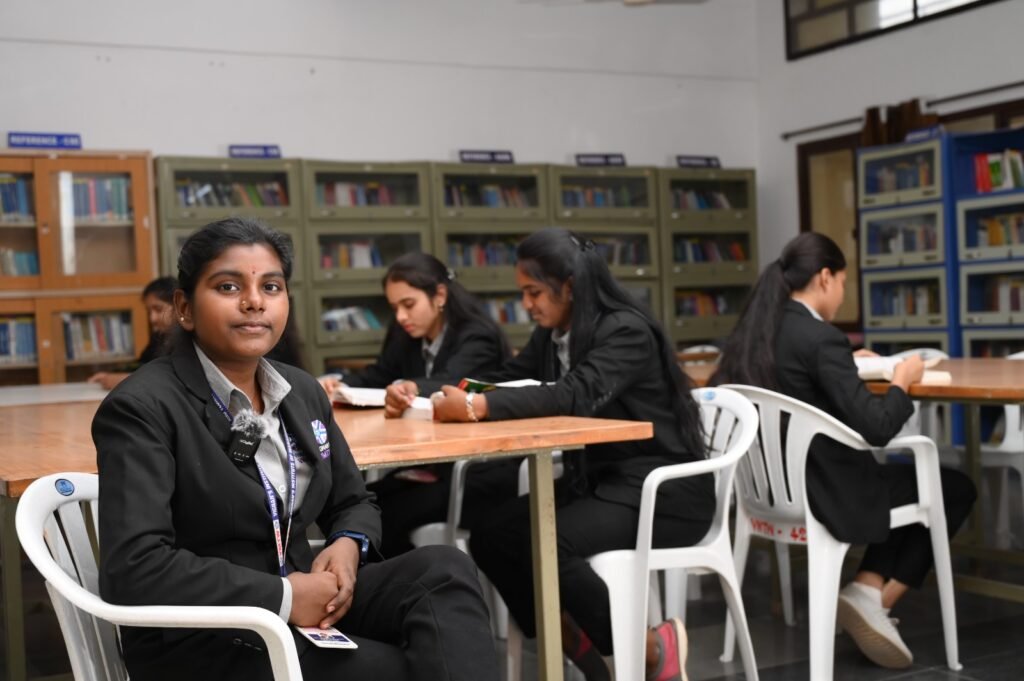
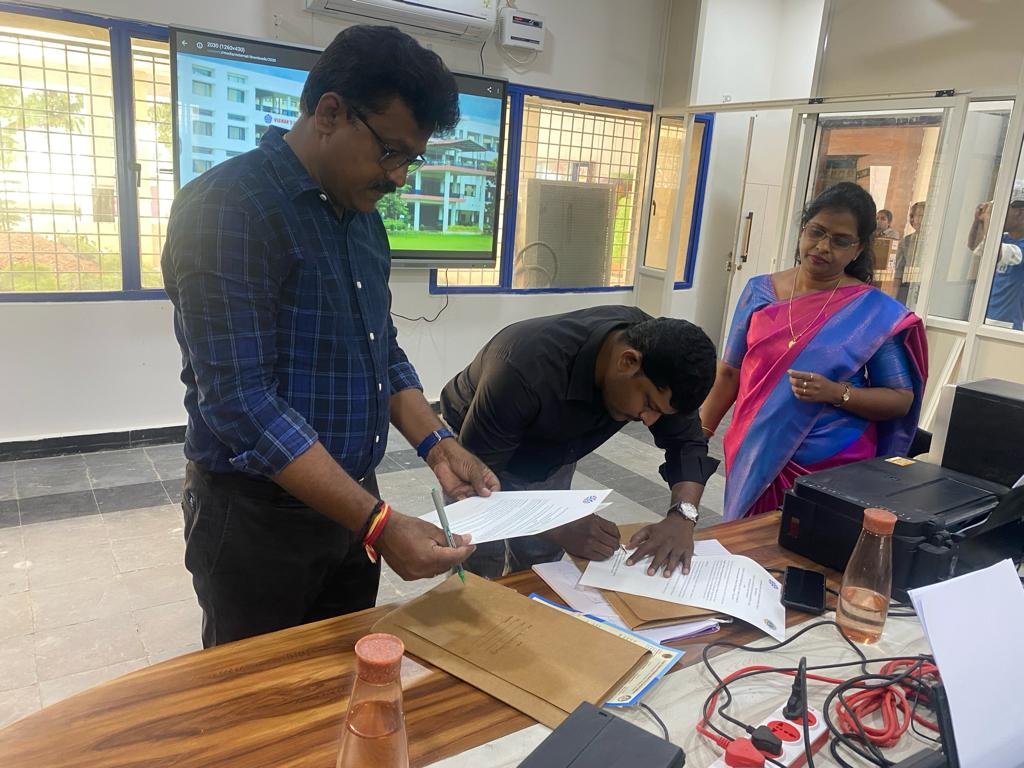
Career Outcomes
We Are Open For Opportunities!
At Vignan’s Institute of Management & Technology for Women (VMTW), we believe in creating pathways for growth, innovation, and success. We welcome collaborations with industries, research organizations, academic institutions, and aspiring innovators to build a strong ecosystem of learning and development.
Whether you are a student aiming for excellence, a recruiter seeking talented professionals, or an industry expert looking to collaborate, VMTW offers the right platform to connect, contribute, and create impact. Together, we strive to empower women through education, skill development, and real-world exposure.
Vignan's Institute of Management & Technology for Women
We Are One of the Leading Women’s Engineering Colleges
Vignan’s Institute of Management & Technology for Women (VMTW) is a premier institution dedicated to empowering women through quality technical education, innovation, and skill-based learning. With a strong academic framework, experienced faculty, and modern infrastructure, VMTW focuses on shaping students into confident professionals ready to meet industry challenges and societal needs.
Department Labs
Data Processing Lab
Data Analytics Lab
Data Science Lab
Classroom
Seminar Hall
Recent &
Upcoming
Events
Stay updated on the latest events and activities happening in our department. From workshops and seminars to guest lectures and industry visits, there’s always something exciting on the horizon.
Creative Carnival 2026
24
July, 2025
9:00 am
-
7:00 pm
Hyderabad
Vigyan Vaibhav 2026
26
July, 2025
9:00 am
-
2:00 pm
Hyderabad
Sports Day 2026
8
August, 2025
9:00 am
-
4:00 pm
Hyderabad