BSH
The Department of Basic Sciencesand Humanities was established in the year 2008. It is a multidisciplinary department and it serves as the launch pad for the Engineering study by teaching students the foundation courses in Sciences and Humanities interfacing with the core subjects of engineering. The Department aspires to provide knowledge in the areas of Mathematics, Physics, Chemistry, Humanities, Engineering subjects like CAEG, CPDS, BEE, EDC, ITWs, EWs, Python programming language and Management sciences to the students of engineering to lay strong foundation for respective core engineering discipline. The faculty of the department undertake research in advanced and interdisciplinary areas to keep abreast in the emerging domains.
Our Vision & Mission
At VMTW, our vision is to empower young women through quality education and innovation-driven learning, shaping confident, skilled, and future-ready professionals.
To serve as a spring board by proving comprehensive knowledge base of
Mathematics, Applied Sciences and Humanities to apply in relevant Engineering
practice and Inter-disciplinary Research.
M1: To lay strong foundations of Mathematics, Basic Sciences and
Humanities
through contemporary teaching methods.
M2: To impart communication skills and life skills for overall development and
societal consciousness.
M3: To inspire the faculty members for innovative multi-disciplinary research
through constant interaction with reputed research organizations
Our Journey of Excellence
The Department of Computer Science and Engineering at VMTW was established with a vision to provide quality education and foster overall student development, evolving into a centre of academic excellence and innovation over the years.
2008
Department of Basic Sciences & Humanities established with a vision to strengthen students’ foundational knowledge in Mathematics, Physics, Chemistry, and English communication skills.
2011-2023
Expanded academic support through advanced laboratories, interdisciplinary teaching methods, and skill-oriented learning to enhance student performance and innovation.
2019
B.S&H department strengthened research and academic excellence through faculty publications, workshops, seminars, and industry-oriented initiatives.
2022
Introduced outcome-based learning practices and modern teaching methodologies, supporting holistic student development and academic quality standards.
Facilities
Well-equipped Physics and Chemistry laboratories, modern language labs, digital classrooms, and dedicated research resources for effective learning.
Curriculum
Comprehensive curriculum covering Mathematics, Applied Physics, Chemistry, English, Environmental Science, and interdisciplinary foundational subjects.
Leadership
Guided by experienced faculty members committed to academic excellence, research contributions, student mentoring, and continuous professional development.
Department Leadership
Meet our Head of Department
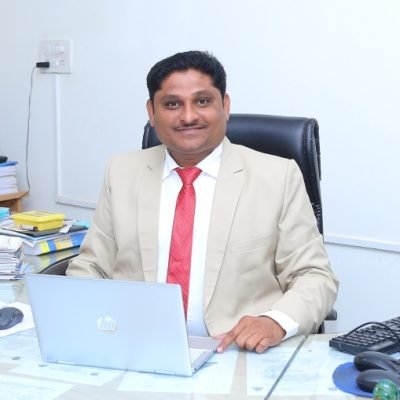
Dr. D. Ranadheer Reddy
Associate Professor & Head of Department [BSH]
Message from HOD
Welcome to the Department of Basic Sciences & Humanities. Our department is committed to building strong academic foundations in Mathematics, Physics, Chemistry, English, and Humanities, enabling students to excel in engineering education and professional careers. We focus on quality teaching, practical learning, research, innovation, and holistic student development to meet the evolving demands of society and technology.
Educational Framework
Our comprehensive educational approach designed to create industry-ready professionals
PEO1
Students will establish a strong foundation in computer science by applying mathematical principles and core engineering fundamentals to analyze, design, and develop effective computing solutions.
PEO2
Students will use modern tools, platforms, and technologies supported by a strong learning infrastructure to solve computing problems and adapt to technological changes.
PEO3
Students will prepare for careers and entrepreneurship by developing employability skills, professional competence, ethical values, and social responsibility to meet industry and societal needs.
Program Outcomes (PO)
Comprehensive learning outcomes that our graduates will demonstrate
PO1
Engineering Knowledge: Apply the knowledge of mathematics, science, engineering fundamentals and an engineering specialization to the solution of complex engineering problems
PO2
Problem Analysis: Identify, formulate, review research literature, and analyze complex engineering problems reaching substantiated conclusions using first principles of mathematics, natural sciences and Engineering sciences.
PO3
Design/Development of Solutions: Design solutions for complex engineering problems and design system components or processes that meet the specified needs with appropriate consideration for the public health safety, and the cultural, societal, and environmental considerations.
PO4
Conduct Investigations of Complex Problems: Use research-based knowledge and research methods including design of experiments, analysis and interpretation of data, and synthesis of the information to provide valid conclusions
PO5
Modern Tool Usage: Create, select and apply appropriate techniques, resources and modern engineering and IT tools including prediction and modeling to complex engineering activities with an understanding of the limitations.
PO6
The Engineer and Society: Apply reasoning informed by the contextual knowledge to assess societal, health, safety, legal and cultural issues and the consequent responsibilities relevant to the professional engineering practice.
PO7
Environment and Sustainability: Understand the impact of the professional engineering solutions in societal and environmental contexts and demonstrate the knowledge of,and need for sustainable development.
PO8
Ethics: : Apply ethical principles and commit to professional ethics and responsibilities and norms of the engineering practice.
PO9
Communication: Communicate effectively on complex engineering activities with the engineering community and with society at large, such as being able to comprehend and write effective reports and design documentation, make effective presentations and give and receive clear instructions.
PO10
Project Management and Finance: Demonstrate knowledge and understanding of the engineering management principles and apply these to one's own work, as a member and leader in a team to manage projects and in multidisciplinary environments.
PO11
Life-Long Learning: Recognize the need for and have the preparation and ability to engage in independent and lifelong learning in the broadest context of technological change.
Engineering Knowledge
Apply the knowledge of mathematics, science, engineering fundamentals and an engineering specialization to the solution of complex engineering problems.
Additional Outcomes
Our program encompasses all 12 standard ABET program outcomes including problem analysis, design/development of solutions, modern tool usage, individual and team work, communication, project management, lifelong learning, and more.
PSO1
Apply mathematical foundations, basic sciences, and core engineering principles in a multidisciplinary manner to analyse and solve complex computer science and engineering problems.
PSO2
Develop solutions to real-world computing problems using modern tools, diverse programming languages, and open-source platforms.
PSO3
Apply ethical principles and consider societal impact and Sustainable Development Goals while developing and using computing solutions.
R18 Regulation
Department Academic Calendar
Syllabus (BSH — Common to all Departments)
Non Teaching Staff
| S.No | Name of the Employee | Designation | Qualification |
|---|---|---|---|
| 01 | Mr. E. Prashanth | Lab Assistant | M.Sc |
| 02 | Mr. T. Rajesh | Lab Assistant | B.Sc |
| 03 | Mrs. K. Anitha | Lab Assistant | M.Sc |
| 04 | Mrs. K. Swaroopa | Lab Assistant | B.Sc |
| 05 | Mrs. T. Divya Jyothi | Lab Assistant | B.Com |
| 06 | Mr. T. Kalachary | Lab Assistant | Diploma |
| 07 | Mr. B. Raju | Lab Assistant | Diploma |
News Letter
No information available.
Professional Body Membership
No information available.
Department Achievements
1500+
Graduates
1500+
alumni
1500+
Research
100+
Industry partnerships
Department Sections
Our department offers a wide range of specialized sections, each designed to provide in-depth knowledge and practical skills in key areas of study.
Research
Engaging in cutting-edge research in AI, IoT, and other emerging technologies.
Faculty Participation
Faculty actively contribute to academic leadership and continuous professional development.
Innovations in Teaching
Implementing modern teaching methods, including e-learning and project-based learning.
Professional Societies
Collaborating with professional bodies like ISTE, CSI, and IETE for career growth.
Student Participations
Encouraging student involvement in workshops, seminars, and industry projects.
Student Counsellors
Providing guidance on academic, career, and personal development through dedicated counselling.
About Department
Gain Valuable Knowledge & Experience
Strong Academic Foundation
The department builds a solid foundation in Mathematics, Physics, Chemistry, English, and Communication Skills, helping students strengthen analytical thinking, problem-solving, and professional abilities required for engineering and higher education.
Modern Laboratories & Learning Resources
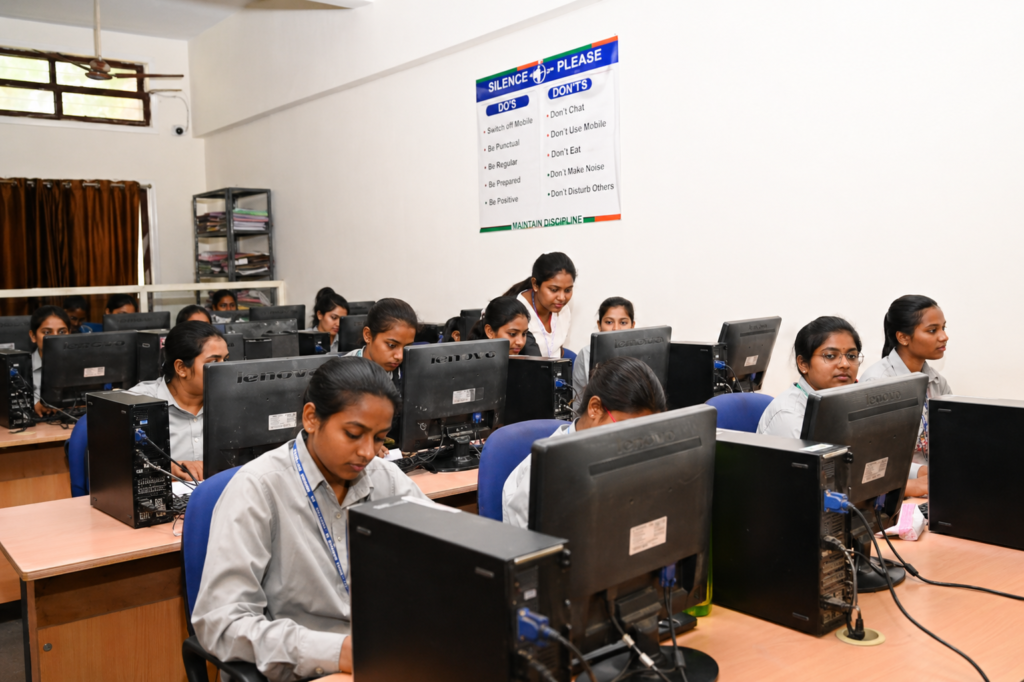
Students gain practical exposure through well-equipped science laboratories, language labs, digital learning tools, and interactive classroom environments that support experiential learning and research activities.
Research & Innovation Support
The department encourages students and faculty to participate in research projects, seminars, workshops, and interdisciplinary activities that promote scientific curiosity, innovation, and academic excellence.
Skill Development & Communication
Special focus is given to communication skills, aptitude training, personality development, and critical thinking to prepare students for placements, competitive exams, and professional careers.
Practical Learning
Hands-on laboratory sessions, scientific experiments, language training, workshops, and interactive learning methods help students connect theoretical concepts with real-world applications.
Career Outcomes
We Are Open for Opportunities!
At Vignan’s Institute of Management & Technology for Women (VMTW), we believe in creating pathways for growth, innovation, and success. We welcome collaborations with industries, research organizations, academic institutions, and aspiring innovators to build a strong ecosystem of learning and development.
Whether you are a student aiming for excellence, a recruiter seeking talented professionals, or an industry expert looking to collaborate, VMTW offers the right platform to connect, contribute, and create impact. Together, we strive to empower women through education, skill development, and real-world exposure.
Vignan's Institute of Management & Technology for Women
We Are One of the Leading Women’s Engineering Colleges
Vignan’s Institute of Management & Technology for Women (VMTW) is a premier institution dedicated to empowering women through quality technical education, innovation, and skill-based learning. With a strong academic framework, experienced faculty, and modern infrastructure, VMTW focuses on shaping students into confident professionals ready to meet industry challenges and societal needs.
Department Labs
JAVA-LAB
UI-design lab
project lab
Machine learning lab
Full Stack Web Development Lab
Skill Development-Node JS Lab
Skill Development Power BI
Accordion item title
Data Structure Lab
Recent &
Upcoming
Events
Stay updated on the latest events and activities happening in our department. From workshops and seminars to guest lectures and industry visits, there’s always something exciting on the horizon.
Creative Carnival 2026
24
July, 2025
9:00 am
-
7:00 pm
Hyderabad
Vigyan Vaibhav 2026
26
July, 2025
9:00 am
-
2:00 pm
Hyderabad
Sports Day 2026
8
August, 2025
9:00 am
-
4:00 pm
Hyderabad